

What does it mean to impregnate nets with Tralopyril? What does the research say? Why did ScaleAQ stop using this Chemical?
[acf_forfatter]
What does it mean to impregnate nets with Tralopyril? What does the research say? Why did ScaleAQ stop using this Chemical?

[acf_forfatter]
What does it mean to impregnate nets with Tralopyril? What does the research say? Why did ScaleAQ stop using this substance?
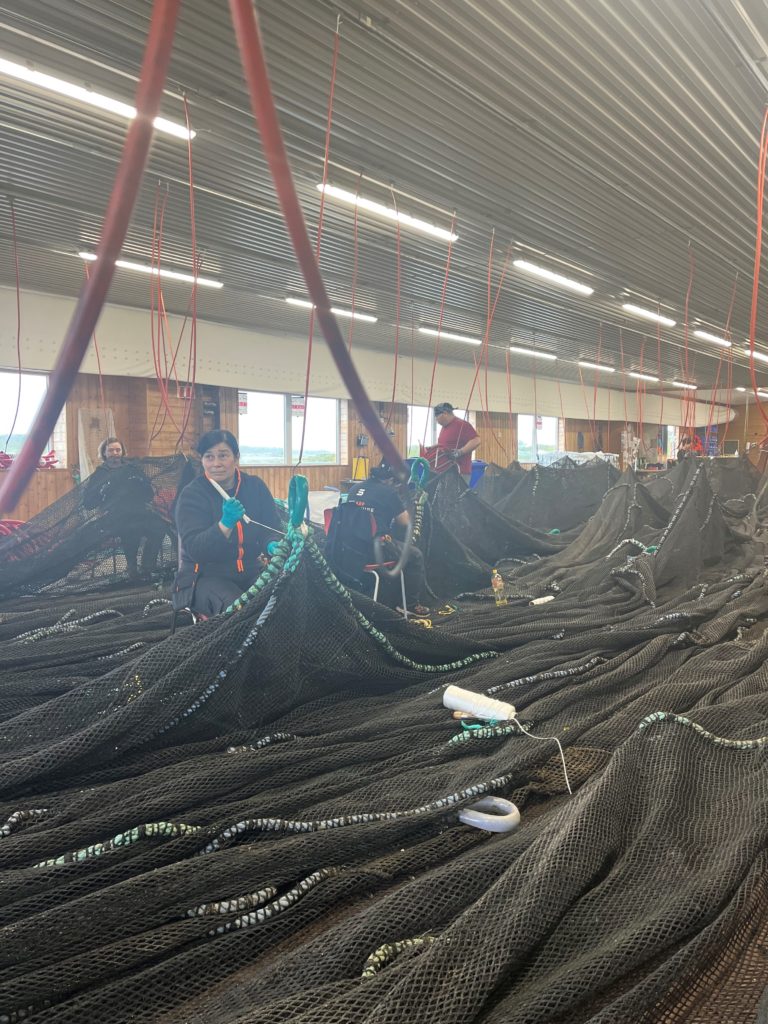
As some of you may already know, ScaleAQ decided in June 2024 to stop all impregnation of nuts with the substance Tralopyril. This was done after the exposure phase for all employees was discovered and not found safe to expose employees to.
– We made this decision to protect employees, the environment and future generations,” says Sigurd Flaat Liljefjell, CEO of ScaleAQ Seabased.

It is believed that Tralopyril can be converted to PFAS, also often referred to as “everlasting” chemicals. A very recent report from NIVA, commissioned by the Norwegian Environment Agency, shows that PFAS has been found both at the net cleaning plant/washing plant and in the vicinity of fish farms in the sea.
The use of Tralopyril is currently very widespread in the Norwegian aquaculture industry, especially since copper has been phased out more and more in recent years. “Our recently opened Scale Innovation Center at Hitra has worked a lot with sustainability in recent years,” says Connor Fostor, CCO, ScaleAQ Seabased.
– As responsible players in the aquaculture industry, it is our duty to reduce our environmental impact and contribute to sustainable development.
Since the NIVA report was published earlier this fall, there has been some media coverage in Norwegian medias. However, the newspaper Dag og Tid has given the report extensive coverage. In addition, several letters to the editor have been written and the findings have been widely debated on social media. Since the content is so clear, it is expected that more media will focus on this case.
– The report points to the discovery of PFAS, which is something the media is very concerned about. It is important that we at ScaleAQ are aware of our choices as a responsible technology supplier,” says Øyvind A. Haram, Head of Communications at ScaleAQ.
– “If this report attracts a lot of attention, at least we’ve explained where we stand and why we’ve made the choices we’ve made. This makes it much easier to explain and give good answers to family and neighbors,” explains Haram.
More than 30 years ago, the aquaculture industry in Norway made a choice regarding the use of antibiotics out of concern for the environment and fear of resistance. At the same time, we now have to make a choice about impregnating agents, says Torstein Kristensen, Head of Biology at ScaleAQ,
– The risk of exposure to humans and the environment with subsequent harmful effects is completely parallel to the antibiotic case, even though the effects (cancer risk, reduced reproductive capacity) are different.

Kristensen says that the trade-off with animal welfare must be minimized by actively working on better and more gentle ways to keep the net clean. In this way, we can ensure good water exchange and thus fish welfare in the facilities.
– Promoting the continued use of such impregnating agents with animal welfare arguments is not a good solution for the industry in the short or long term. We run the risk of reputational problems similar to those that have historically (and still) plagued the use of antibiotics. At the same time, PFAS are “perpetual chemicals” that do not disappear by themselves, but will accumulate over time with continued use. To ensure that the sites where we produce fish today are also suitable for food production in the future, we must make the important choices now.
A separate webinar was held on Wednesday, November 19 to provide more insight into our choices and at the same time inform all employees.
The HSE department has also created a separate question and answer sheet, which may give you answers to any questions you have about the matter.
Do you need more information? Please contact the HSE department by Ellen Fossbakk.
[kontaktperson_single]
Hva vil det å si å impregnere nøter med Tralopyril? Hva sier forskningen? Hvorfor stoppet ScaleAQ bruken av dette stoffet?
[acf_forfatter]
Hva vil det å si å impregnere nøter med Tralopyril? Hva sier forskningen? Hvorfor stoppet ScaleAQ bruken av dette stoffet?
Som noen kanskje har fått med seg allerede, ScaleAQ vedtok i juni 2024 å stoppe all impregnering av nøter med stoffet Tralopyril. Dette ble gjort etter at eksponeringsfasen for alle ansatte ble oppdaget og ikke funnet forsvarlig å eksponere ansatte for.
– Vi tok denne beslutningen for å beskytte ansatte, miljø og fremtidige generasjoner, sier Sigurd Flaat Liljefjell, CEO i ScaleAQ Seabased.
Det er antatt at Tralopyril kan omdannes til PFAS, også ofte omtalt som «evigvarende» kjemikalier. En helt fersk rapport fra NIVA, på oppdrag fra Miljødirektoratet, viser og funn av PFAS både ved notbøteri/vaskeri og i nærheten av oppdrettsmerder i sjø.
Bruken av Tralopyril er i dag svært utbredt i norsk havbruksnæring, særlig siden kobber er faset mer og mer ut de siste årene. Vår notstasjon på Hitra, Scale Innovation Centre som nylig ble åpnet, har jobbet mye med bærekraft de siste årene sier Connor Fostor, CCO, ScaleAQ Seabased.
– Som ansvarlig aktører i havbruksnæringen, er det vår plikt å redusere vår miljøpåvirkning og bidra til en bærekraftig utvikling.
Etter at rapporten fra NIVA ble publisert tidligere i høst, har det vært noe omtale i mediene. Avisen Dag og Tid, har derimot gitt rapporten fyldig dekning. Det er i tillegg skrevet flere leserinnlegg, i tillegg til at funnene er mye debattert i sosiale medier. Siden innholdet er så tydelig, er det ventet at flere medier vil rette blikket mot denne saken.
– Rapporten peker på funn av PFAS, det er noe mediene er svært opptatt av. Det er viktig at vi som jobber i ScaleAQ er bevisst over våre valg som ansvarlig teknologileverandør, sier Øyvind A. Haram, kommunikasjonssjef i ScaleAQ.
– Om det blir mye blest rundt denne rapporten, så har i alle fall vi forklart hvor vi står, og hvorfor vi har tatt de valg vi har tatt. Da er det mye lettere å forklare og gi gode svar til familie og naboer, forklarer Haram.
Havbruksnæringen tok for over 30 år siden et valg, på bruken av antibiotika, av hensyn til ytre miljø og frykt for resistens. Helt parallelt må vi nå ta et valg knyttet til impregneringsmidler, sier fagsjef biologi i ScaleAQ Torstein Kristensen,
– Risiko for eksponering på mennesker og miljø med påfølgende skadelige effekter er helt parallelle til antibiotika-saken, selv om effektene (kreftfare, redusert forplantningsevne) er annerledes.
Kristensen sier at avveiningen mot dyrevelferd må minimeres med å aktivt jobbe fram bedre og mer skånsomme måter å holde nota ren på. Slik kan en sikre god vannutskifting og dermed fiskevelferd i anleggene.
– Å jobbe for fortsatt bruk av slike impregneringsmidler med dyrevelferdsargumentasjon er ikke en god løsning for næringen på kort eller lang sikt. Vi risikerer omdømmeproblemer på linje med det man historisk (og enda) sliter med på antibiotikabruk. Samtidig er PFAS “evighetskjemikalier” som ikke forsvinner av seg selv, men vil akkumulere over tid med fortsatt bruk. For å sikre at de lokalitetene vi produserer fisk på i dag også er egnet for matproduksjon i fremtiden må vi ta de viktige veivalgene nå.
Et eget webinar ble avholdt onsdag 19. nov for å gi mer innblikk i våre valg og samtidig informere alle ansatte.
HMS-avdelingen har og laget et eget spørsmål og svar, ark, som kanskje gir deg svar på evt spørsmål du har rundt saken.
Trenger du mer informasjon? Ta kontakt med HMS– avdelingen ved Ellen Fossbakk.
[kontaktperson_single]